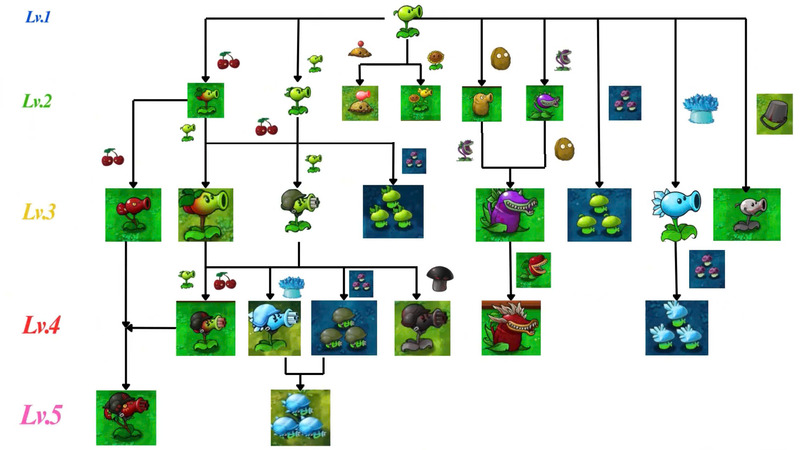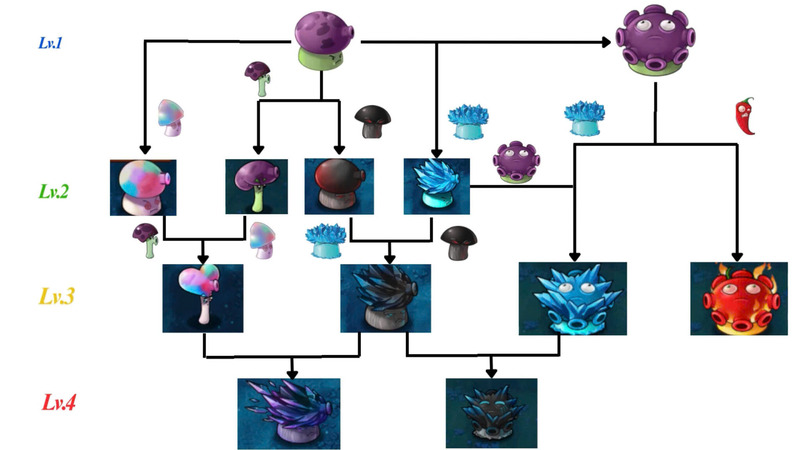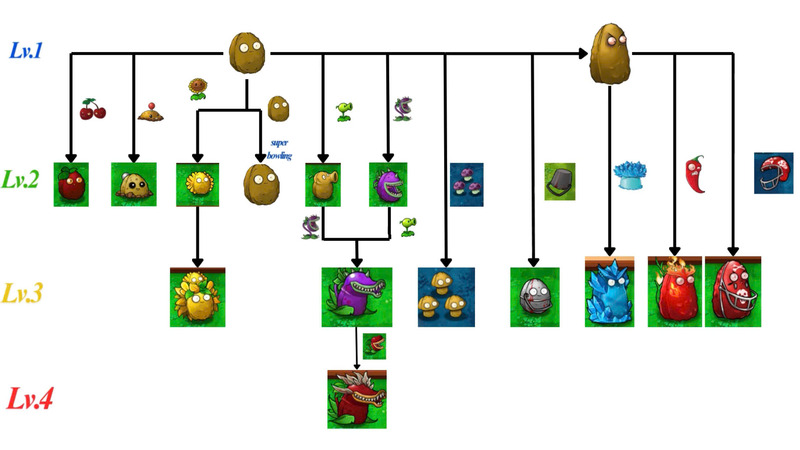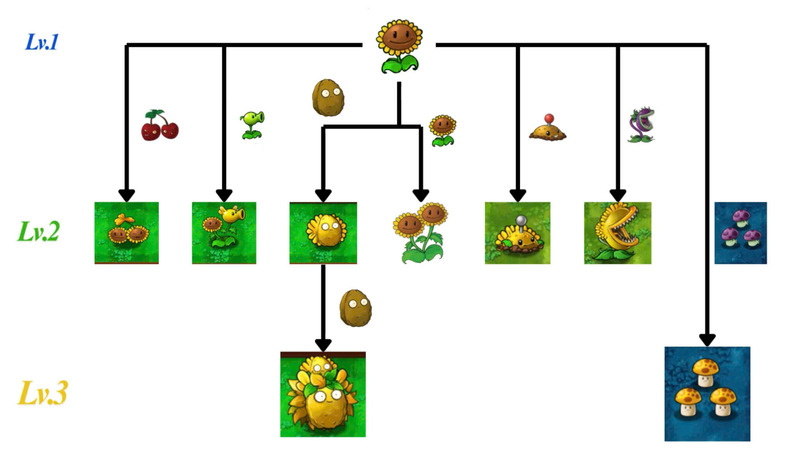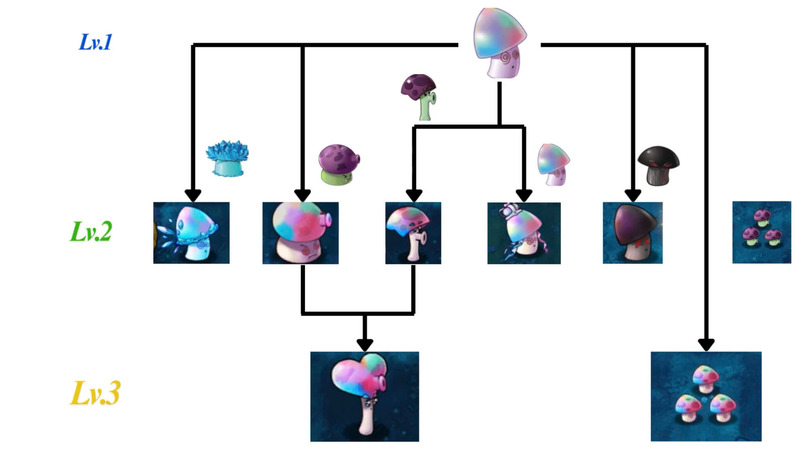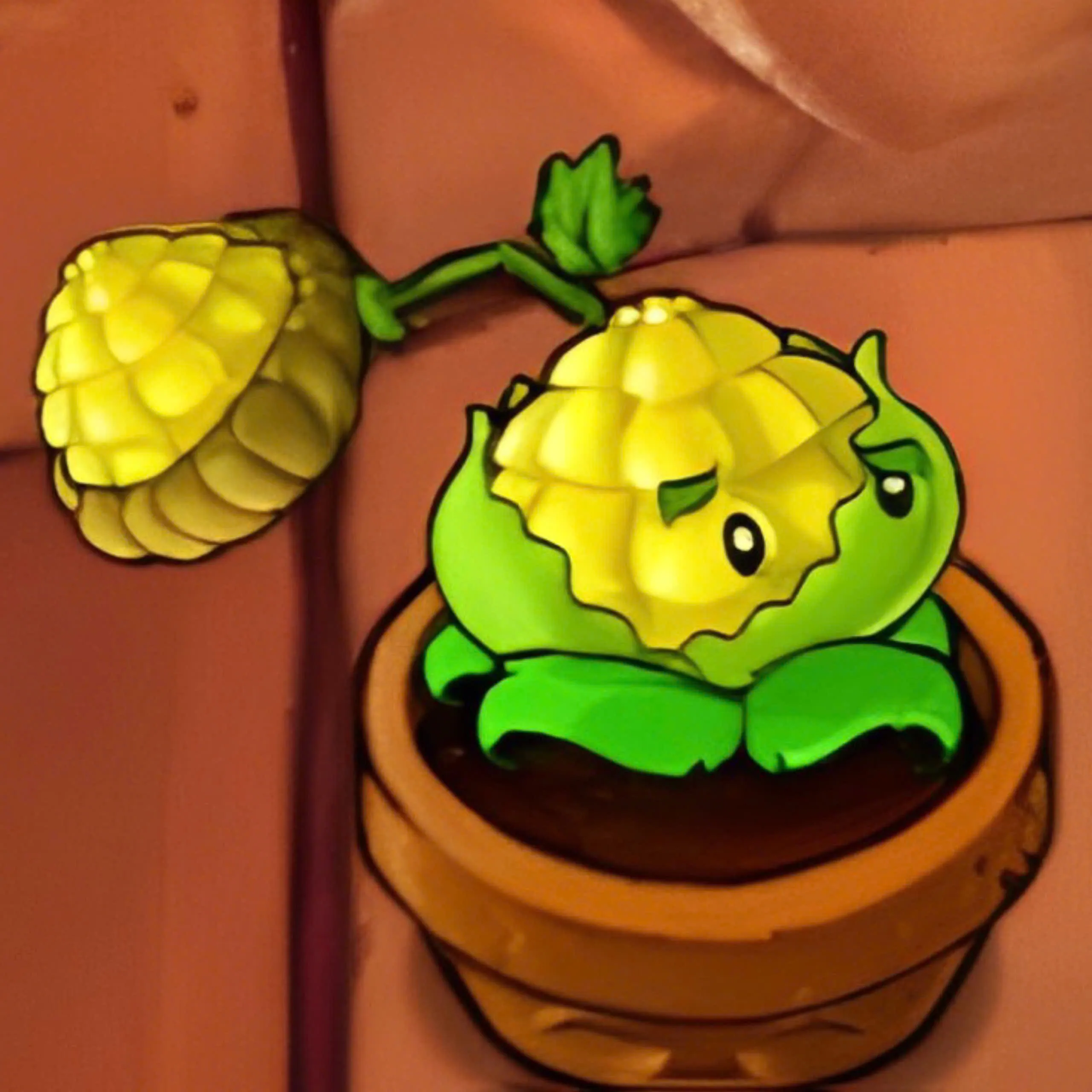


- Best use
- Choose a plant by lane job, then verify the recipe in your game version
- Coverage
- Selected high-value families rather than a low-context clone of every entry
- Version warning
- Names, recipes, costs, and behavior can change between fan builds
- Historical scope
- The former 2.1.4 catalog is preserved and clearly labeled
How to use this plant wiki
Start with the pressure your lawn cannot currently answer: too little sun, weak early damage, a lane that collapses to armor, poor crowd control, or an exposed damage dealer. A good fusion earns its tile and resource cost by solving at least two of those problems or by solving one critical problem much better than a basic plant.
Plant names in English are community translations and can vary in spelling. For example, Cherry Shooter and Cherryshooter may refer to the same family, while translated compounds may reverse their ingredient order. Match the icon and behavior in your build rather than trusting spelling alone.
- Identify the job: Economy, single-target damage, splash, slow, control, tanking, anti-air, or utility.
- Check the lane: A powerful fusion in the wrong lane or too late in the wave is still a poor play.
- Verify the version: A video or recipe from 2.1.4 may not behave identically in 3.8.x.
- Test one variable: Use a low-risk level to compare range, cadence, targeting, and interaction before building a strategy around it.
Plant roles and what a balanced lawn needs
The original guide separated classic enhanced plants, hybrid plants, Super Hybrid plants, and fusion combinations. A more useful classification is functional: economy keeps the build affordable; damage converts time into defeated zombies; control creates more time; defense protects expensive tiles; and utility answers special threats such as fog, metal, water, or flying enemies.
| Role | Question it answers | Examples from the legacy catalog |
|---|---|---|
| Economy | How will the lawn fund its next fusion? | Pea Sunflower, Flower-nut, Sun Mine, Sea Sun-shroom |
| Sustained damage | What handles repeated medium targets? | Snow Repeater, Gatling Snow, Repea-shroom, Gatling Cherry |
| Burst or splash | What stops a dense wave or emergency? | Gatling Doom, Cherry Shooter, Doom Ice-shroom, Starjoker |
| Control | How do we slow, charm, freeze, or reposition threats? | Charm-shroom, Ice Hypno-shroom, Squash Kelp, Ice Gloom-shroom |
| Defense | Which tile buys time for the engine behind it? | Super Tall-nut, Chomp-nut, Iron Wall-nut, Rugby Tall-nut |
| Utility | Which special rule is blocking progress? | Sea Lamp-shroom, Magnet Pumpkin, Glowver, Cactus Ball |
Selected fusion families worth learning
Rather than memorize hundreds of translated labels, learn what each ingredient family tends to add. Pea and Gatling lines generally emphasize projectile throughput; Sunflower lines add economy; Wall-nut and Pumpkin lines add durability; Cherry and Doom lines add explosive pressure; Snow and Ice lines add tempo control; Magnet, Cactus, Kelp, and fog plants answer special battlefield rules.
The legacy catalog described Pea Sunflower as firing sun-producing bullets, Flower-nut as producing sun while protecting plants, Cherry-nut as absorbing cherry explosion damage, Chomp-nut as recovering toughness after eating, and Ice Cattail as attacking across lanes while slowing. Treat those descriptions as orientation, then confirm the current animation and effect in your build before committing scarce resources.
| Family | Strategic identity | Board-building lesson |
|---|---|---|
| Pea + economy | Damage that supports sun generation | Useful when early pressure and scaling compete for the same tiles |
| Nut + production | Economy protected by its own body | Reduces the penalty for placing producers in contested lanes |
| Cherry or Doom | Burst and area pressure | Save for wave timing; excessive burst can starve sustained damage |
| Snow or Ice | Slows or freezes to increase firing time | Control becomes stronger when several attackers benefit from it |
| Chomper + defense | Front-line removal with durability | Placement and recovery windows matter more than headline damage |
| Magnet or utility | Counter to a specific zombie property | Do not pay for utility until the level actually presents that threat |
A repeatable fusion strategy loop
A successful lawn is an economy-and-tempo loop: establish enough sun to survive, spend only enough to stabilize, turn safe tiles into stronger dual-purpose plants, then reserve burst or control for the next pressure spike. Fusing everything immediately can make the board impressive but brittle because one expensive answer may leave three lanes underdeveloped.
- 01
Scout: Read the level's lane rules and first zombie types before committing a special counter.
- 02
Stabilize: Build the cheapest reliable damage and economy that survives the opening.
- 03
Fuse for a reason: Name the job the result must perform. If it does not fix a current or imminent weakness, wait.
- 04
Measure: Watch targeting, range, cooldown, and whether the fusion changed your sun curve.
- 05
Iterate: Change one ingredient or placement on the next attempt so the result teaches you something.
Historical 2.1.4 plant catalog
The original indexed wiki grouped plants under Ultimate Fusion, Basic Fusion, Upgraded Fusion, mushroom fusions, aquatic and fog plants, torch and fire families, ice families, magnetic plants, defensive hybrids, and Super Hybrid exclusives. Recognizable entries included Lotus, Cherrizilla, Barley, Sword Starfruit, Queen Hypno-shroom, Super Sun-nut, Gatling Doom, Pea Sunflower, Cherry Shooter, Super Tall-nut, Gatling Snow, Pea-nut, Flower-nut, Doom Ice-shroom, Sun Chomper, Iron Peashooter, Cherry-nut, Chomp-nut, Rugby Tall-nut, Ice Fume-shroom, Repea-shroom, Squash Kelp, Sea Lamp-shroom, Spicy Squash, Glowver, Ice Cattail, and Fire Tall-nut.
This is an archive of the earlier page's terminology, not a guarantee that every label, recipe, tier, cost, or ability still exists unchanged in PVZ Fusion 3.8.x. The former sections about level-based evolution tiers, premium Super Hybrids, regional exclusive plants, holiday exclusives, and universal unlock paths lacked dependable evidence and are intentionally not repeated as mechanics.
Use this list to recognize old searches and guides. Use the current build or a current recipe source to confirm live behavior.
How to verify a recipe instead of guessing
A screenshot, short video, and translated plant list can each hide a different version. Strong verification combines the exact game version, visible ingredient icons, the resulting plant, and observable behavior. When community sources disagree, record both possibilities instead of forcing one universal recipe.
The Fusion Lab distinguishes curated recipes from strategy simulations. A simulated combination is for replayable planning and sharing; it must not be cited as proof that the mod implements that recipe. That boundary keeps the interactive tool useful without turning invented combinations into wiki facts.